
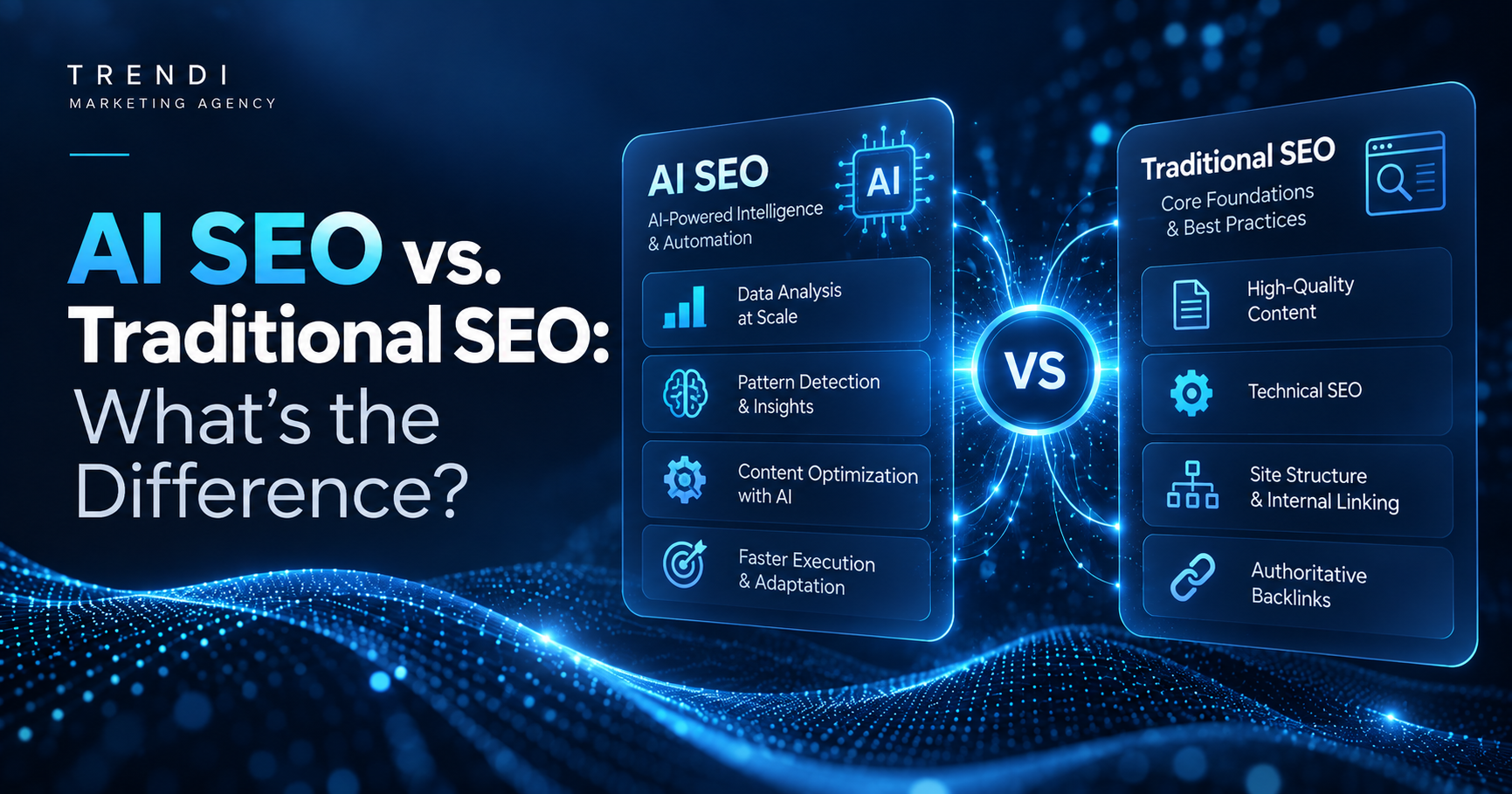
AI SEO and traditional SEO are not opposites
Traditional SEO focuses on making helpful, relevant websites easier for search engines and people to discover. AI SEO may describe either using artificial intelligence to support SEO work or optimizing content for discovery within AI-driven search experiences. Those are related but distinct ideas.
What remains essential
Technical accessibility, clear site architecture, useful content, relevant internal links, accurate business information, and trustworthy expertise still matter. AI does not remove these fundamentals.
Where AI helps SEO teams
- Summarizing patterns in Google Search Console data
- Grouping related search intents and identifying potential cannibalization
- Suggesting internal linking opportunities for editorial review
- Prioritizing content refresh opportunities
- Helping automate recurring performance reporting
How AI-powered search changes measurement
Businesses should track organic clicks, qualified conversions, search visibility, and the quality of leads—not just whether content appears in an AI-generated answer. Attribution for AI search referrals remains imperfect.
Common mistakes
Publishing large amounts of unreviewed AI-generated content, creating near-duplicate location pages, chasing unverified AI ranking factors, and treating estimated visibility as revenue can all distract from useful SEO improvements.
Where to start
Audit your existing website first. Then establish baseline traffic, rankings, conversions, and content quality. Run small experiments and compare results over time.
Related reading
Start with our AI digital marketing pillar guide, learn how MCP connects AI to tools, or review how to evaluate an SEO agency.
